
ESCAPE EQUIPMENT. CLEAR REQUIREMENTS.
Contact

EEBD VS. SCBA

EEBD vs SCBA: differences and uses.

An EEBD helps a person leave a hazardous atmosphere. Entry-and-escape SCBA supports trained personnel performing approved tasks. Their roles are different, even when both carry a breathing supply.

View the comparison ↓
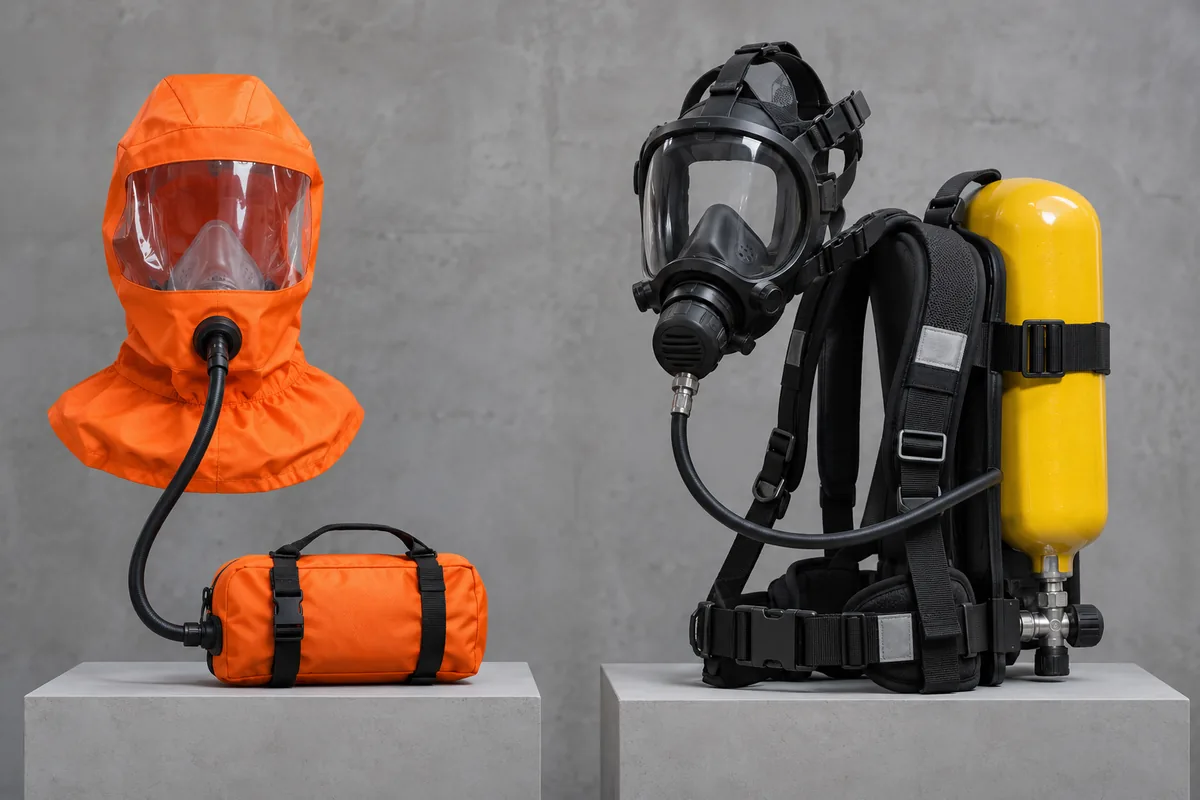
Escape hood and compact supply pouch beside an SCBA face mask, harness and backpack cylinder.
01 / EEBD

For escape.

Emergency escape breathing device

02 / SCBA

For approved response tasks.

Entry-and-escape self-contained breathing apparatus

Six differences to examine

Comparison of roles. Sources reviewed November 16, 2026.
ConsiderationEEBDEntry-and-escape SCBA
PurposeLeave a hazardous atmosphere. No firefighting, rescue entry or re-entry.Entry, work and escape only within the specific set’s approvals and the response plan.
Typical arrangementA hood or other approved interface with a compact breathing supply. Designs vary.A full-face mask, regulator, harness and carried cylinder in a typical open-circuit set.
Breathing supplyCompressed-air or closed-circuit oxygen systems, depending on the device. A filtering smoke hood is a different category.Open-circuit sets supply compressed breathing air. Other SCBA types use a closed circuit.
DurationRead the exact model rating: Saver CF variants, for example, offer 10 or 15 minutes. Do not treat a rating as guaranteed escape time.Depends on the approved configuration, cylinder and air consumption. Workload affects usable time. There is no universal duration.
Training and fitDevice familiarization, practice with a dedicated trainer and a workplace escape plan. Follow the interface-specific fit requirements.Task-specific training and a respiratory protection program. Tight-fitting facepieces require appropriate fit testing and seal checks.
ReadinessCheck the exact manufacturer’s storage, inspection, expiry and service instructions. Keep training and operational equipment distinct.Follow the manufacturer’s inspection, cylinder, cleaning and service requirements, with records appropriate to the program.

Comparison of roles. Sources reviewed November 16, 2026.

Purpose

EEBD
Leave a hazardous atmosphere. No firefighting, rescue entry or re-entry.
Entry-and-escape SCBA
Entry, work and escape only within the specific set’s approvals and the response plan.

Typical arrangement

EEBD
A hood or other approved interface with a compact breathing supply. Designs vary.
Entry-and-escape SCBA
A full-face mask, regulator, harness and carried cylinder in a typical open-circuit set.

Breathing supply

EEBD
Compressed-air or closed-circuit oxygen systems, depending on the device. A filtering smoke hood is a different category.
Entry-and-escape SCBA
Open-circuit sets supply compressed breathing air. Other SCBA types use a closed circuit.

Duration

EEBD
Read the exact model rating: Saver CF variants, for example, offer 10 or 15 minutes. Do not treat a rating as guaranteed escape time.
Entry-and-escape SCBA
Depends on the approved configuration, cylinder and air consumption. Workload affects usable time. There is no universal duration.

Training and fit

EEBD
Device familiarization, practice with a dedicated trainer and a workplace escape plan. Follow the interface-specific fit requirements.
Entry-and-escape SCBA
Task-specific training and a respiratory protection program. Tight-fitting facepieces require appropriate fit testing and seal checks.

Readiness

EEBD
Check the exact manufacturer’s storage, inspection, expiry and service instructions. Keep training and operational equipment distinct.
Entry-and-escape SCBA
Follow the manufacturer’s inspection, cylinder, cleaning and service requirements, with records appropriate to the program.

Selection depends on the hazard assessment, approvals and applicable instructions. See the sources below.

The task comes first

For maritime applications, the IMO Fire Safety Systems Code reserves EEBDs for escape. Firefighting and entry into oxygen-deficient spaces require breathing apparatus specifically suited to the task. A hood or a cylinder alone does not establish that suitability.

Compare the exact configuration

“SCBA” describes a broad equipment class that also includes escape-only devices. This comparison uses SCBA to mean an entry-and-escape set. Confirm the approval, operating limits and instructions for the exact unit; do not assume every SCBA is suitable for firefighting.

Build the purchasing brief around the hazard

Ask your safety lead to define the application, required approvals and escape or response plan. List the exact equipment, dedicated trainers, accessories and service requirements separately. Compare EEBD models only after these requirements are established.

START WITH YOUR REQUIREMENTS

Have a model number or an equipment list?

Bring the specification. We’ll help define the next conversation.

Prepare an equipment enquiry