
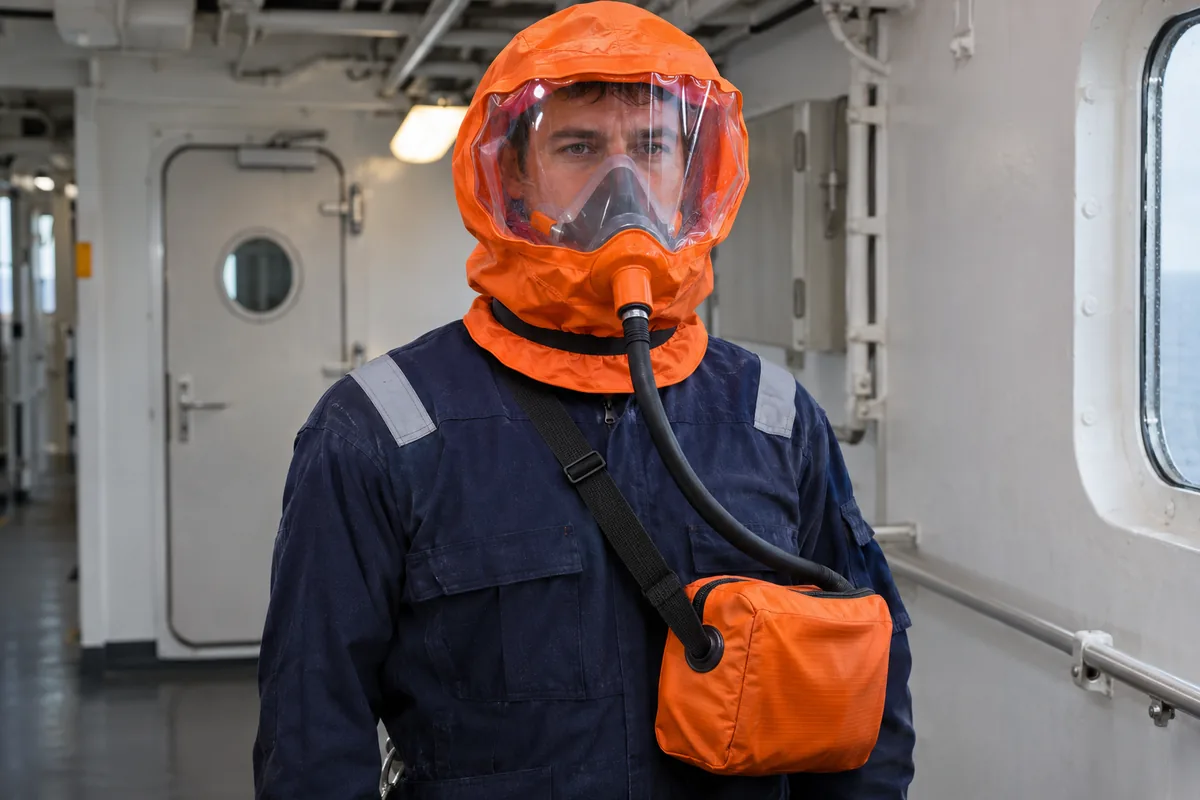
Escape-only devices
Transport Canada’s EEBD bulletin distinguishes escape devices from equipment intended for firefighting or entry into oxygen-deficient spaces. Its historical model list is not a current catalogue of approved products.
Air supply and filtration
Filtering equipment does not supply oxygen. Equipment selection must account for the actual hazards and intended use; the categories are not interchangeable.
Read the model-specific instructions
Some escape devices are self-contained breathing apparatus by technical design. The critical distinction is intended use: escape-only equipment is not working or rescue-entry equipment. Ratings and service requirements remain model-specific.
Common questions
How long does an EEBD last?
Rated duration depends on the model, variant and test basis. Compare these together. For example, the M-20.2 manufacturer distinguishes a 10-minute NIOSH rating from a 15-minute European rating. A rated duration does not guarantee the time available in an actual escape.
Is a compressed-air device equivalent to an oxygen device?
These devices can use different breathing systems and configurations. The shared EEBD description does not make them interchangeable. Selection must follow the application’s requirements and the exact model’s instructions.
Are training units and brackets included?
Package contents depend on the configuration and quotation. List each trainer, bracket and accessory separately with its quantity and reference. Do not assume these items are included with an operational device.